Reduction of Aggregate for Bearing Capacity
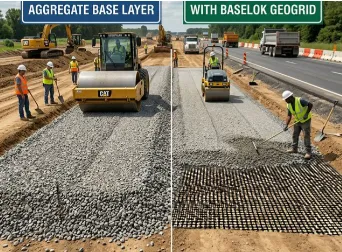
REDUCTION OF AGGREGATE
Optimize bearing and performance while reducing aggregate costs
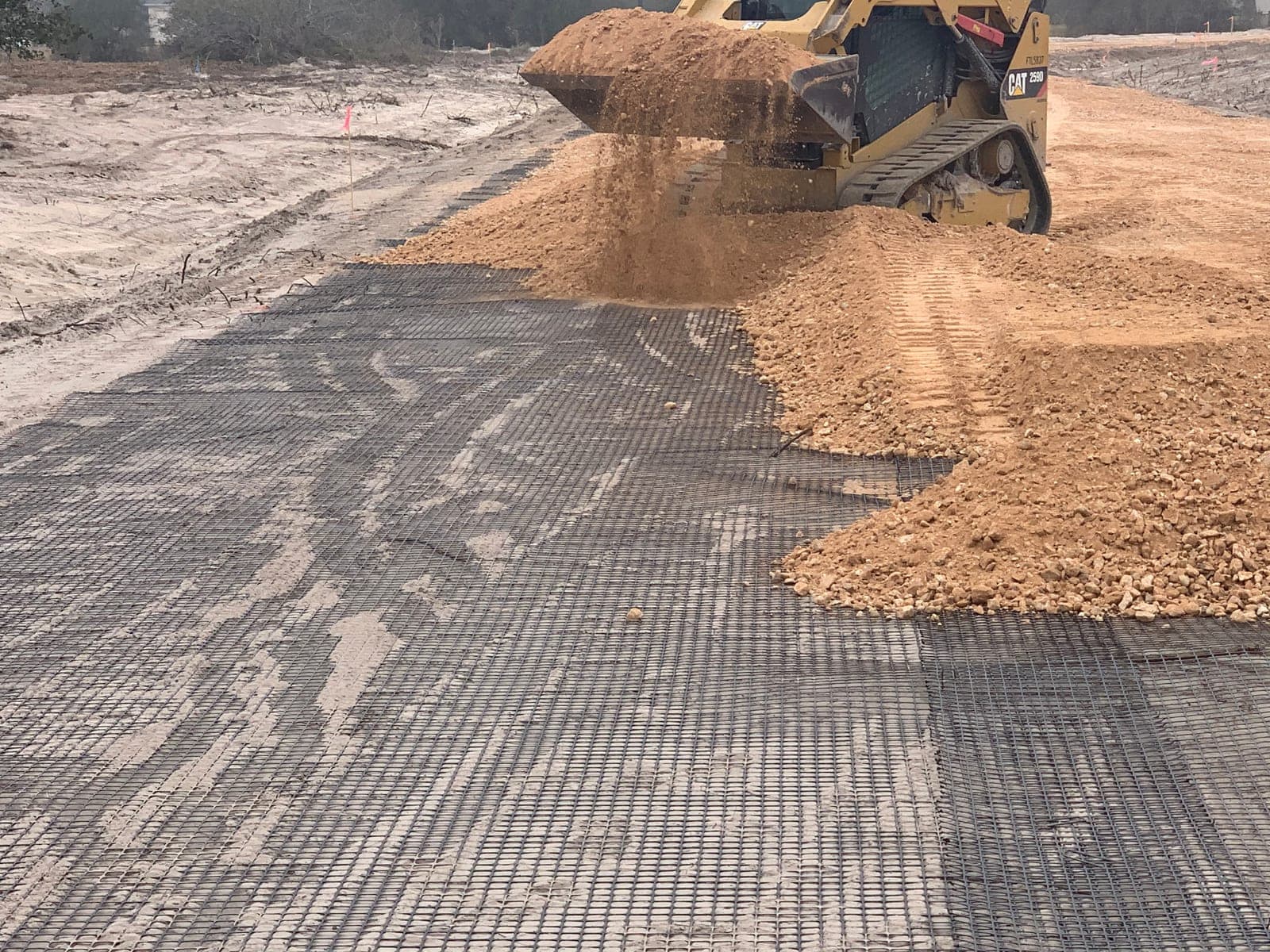
In foundation and roadway construction, achieving sufficient bearing capacity typically requires thick layers of imported granular fill. BaseLok GeoGrids and GeoCells provide mechanical stabilization increasing the structural efficiency of the aggregate layer allowing designers to achieve their target bearing capacity with significantly less fill material. This reduction in aggregate volume translates directly to lower material costs, fewer truck movements, and a faster construction schedule.
Efficiency through Mechanical Stabilization
Aggregate is often one of the largest commodity costs on a construction site. When building on poor subgrades, the traditional "solution" is to dump more stone. BaseLok offers a smarter, more sustainable engineering approach.
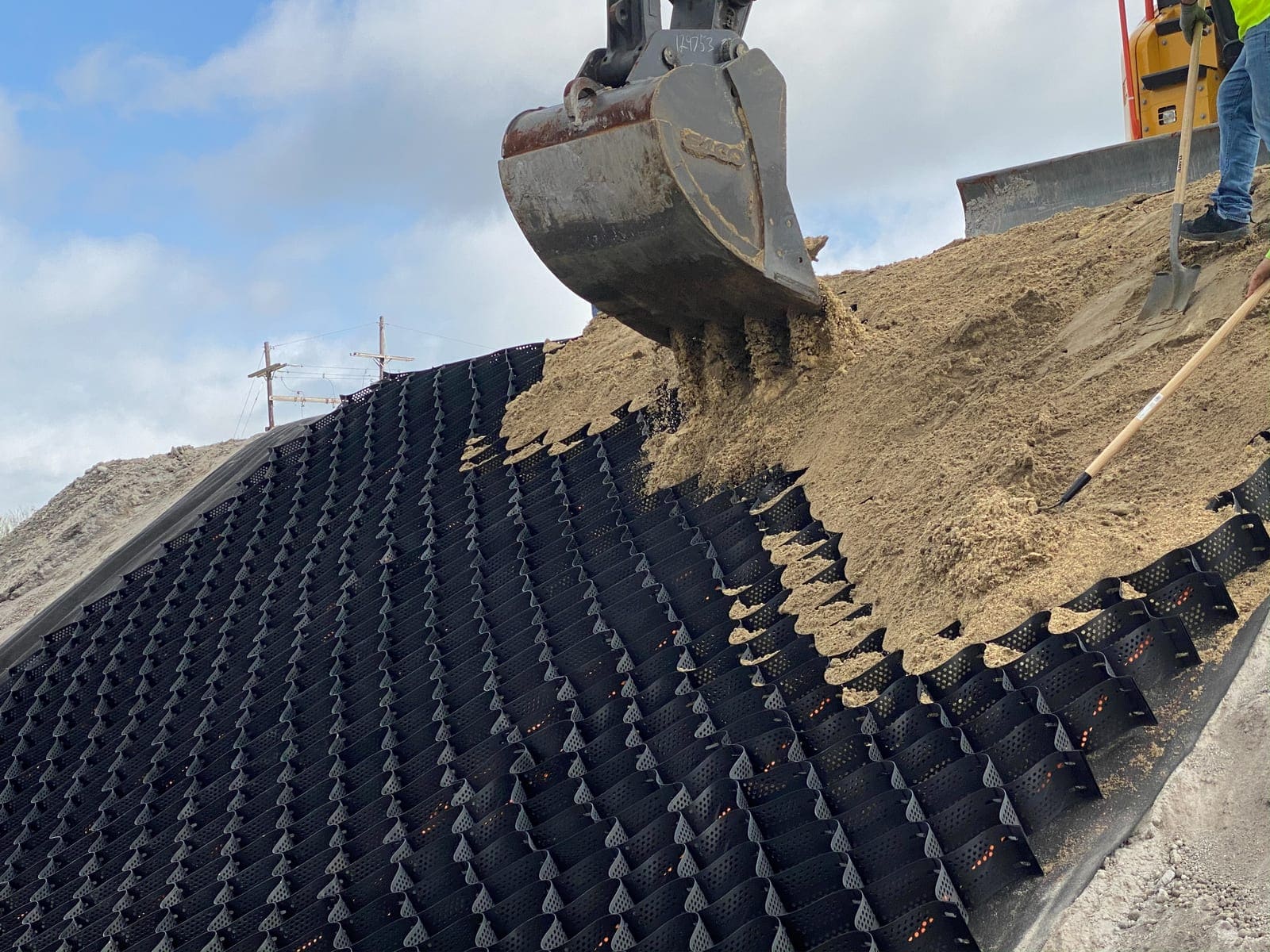
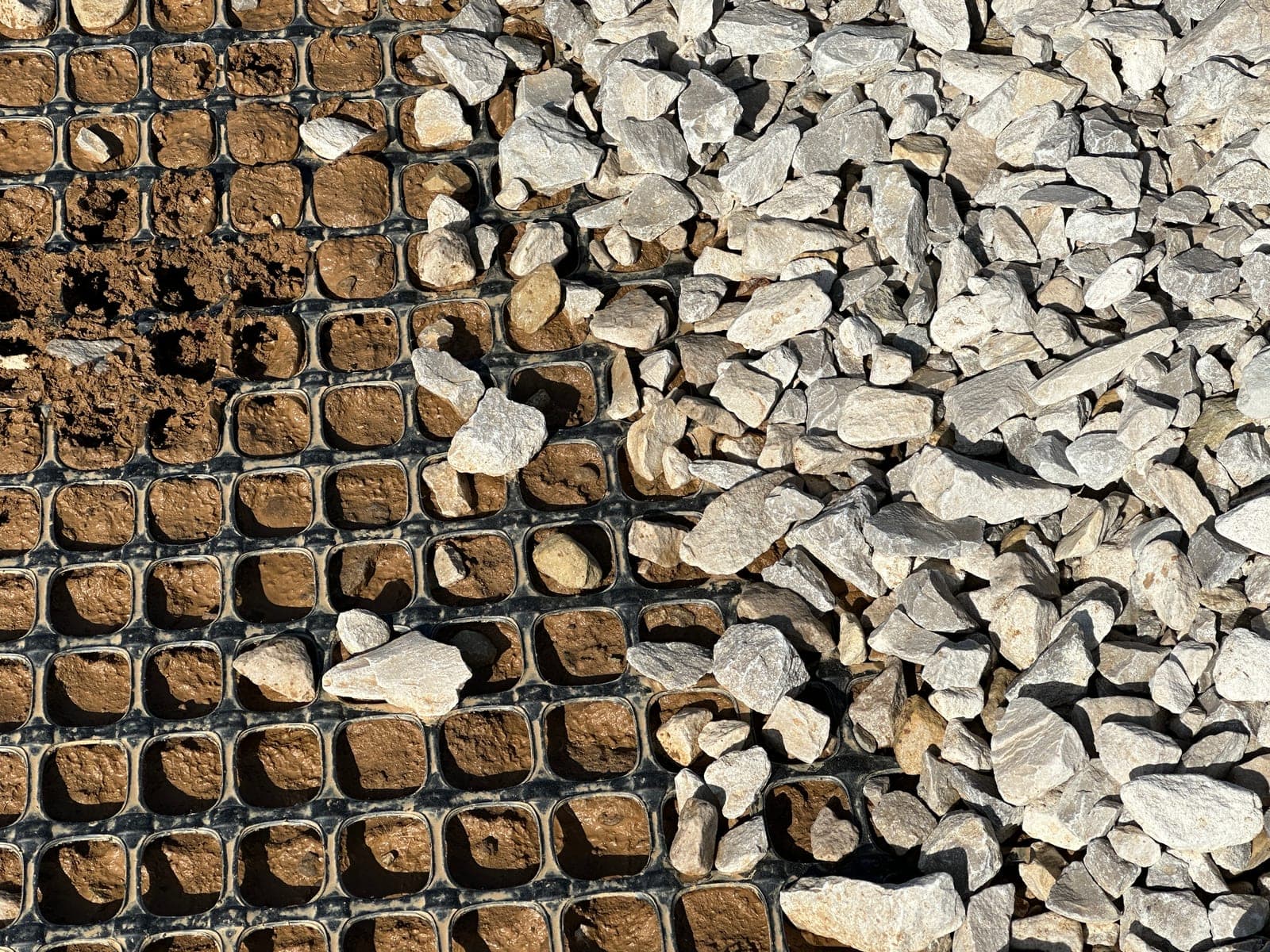
By placing BaseLok high-tensile geogrids at the bottom or within the granular layer, we create a Mechanically Stabilized Layer (MSL). The geogrid interlocks with the aggregate, providing lateral confinement that prevents the individual stone particles from shifting or sliding past one another. This confinement creates a composite layer with much higher stiffness and load-bearing performance than the aggregate alone. For even more extreme loading or exceptionally weak soils, BaseLok GeoCell can be added for complete cellular confinement. This cellular confinement prevents the lateral displacement of infill material, allowing foundations to be safely constructed on soils with very low CBR values.
Because the MSL is so much more efficient at distributing loads, the total thickness of the aggregate layer can be reduced by 30% to 50% while still providing the required bearing capacity for the foundation. This means less excavation, less imported fill, less compaction work, and a significant reduction in the project's carbon footprint. On large industrial sites, these savings can amount to hundreds of thousands of dollars in material and logistics costs alone.
Applicable Project Types
- Large industrial site developments with extensive fill requirements
- Pavement structures for logistics centers and port facilities
- Foundations for residential and commercial complexes
- Crane pads and working platforms on weak soils
- Green construction projects seeking to minimize material usage
BaseLok stabilization technology allows you to build stronger, more reliable infrastructure using fewer natural resources, delivering a win-win for both project budgets and environmental sustainability.
Key Benefits
- Reduce aggregate layer thickness by 30% to 50%
- Significant savings in material and transportation costs
- Achieve desired bearing capacity with greater performance and efficiency
- Accelerate construction by reducing fill and compaction
- Minimize site excavation and spoil removal
- Support sustainable construction through resource optimization
Related Products
Resources
Featured Insights
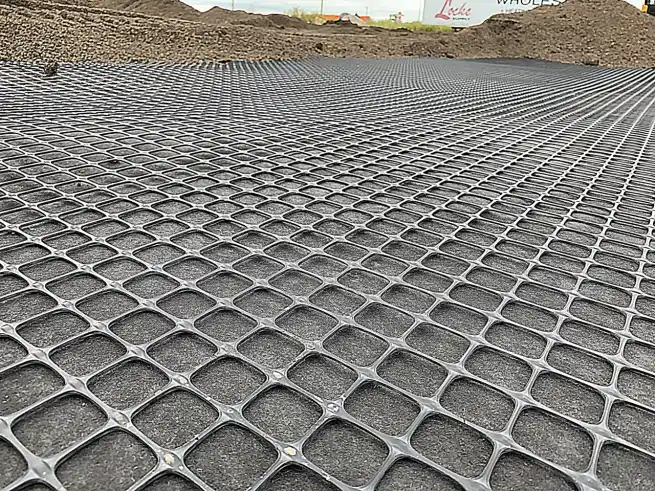
Maintaining the integrity of soil layers is critical for long-term infrastructure performance. Baselok FabGrid...
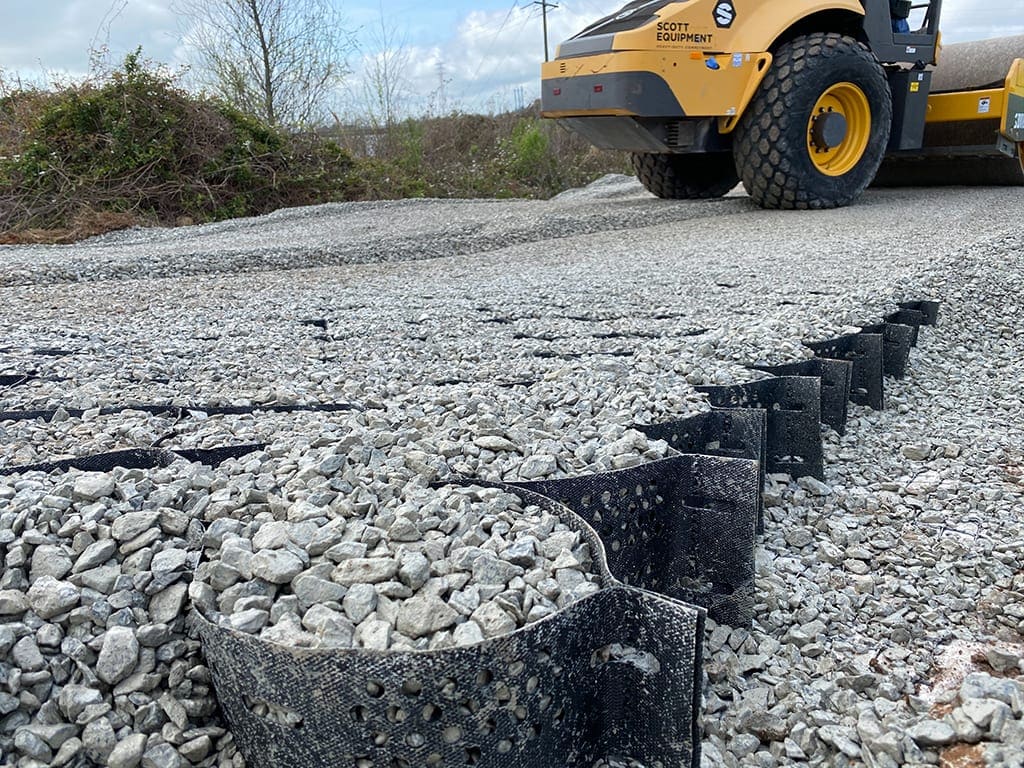
Infrastructure development in weak soil conditions requires innovative reinforcement solutions. Baselok GeoCel...
Explore how advanced geosynthetic solutions like Baselok Geogrid and FabGrid are transforming modern construct...
Understand how Baselok GeoCell and SiltGuard solutions help manage erosion and protect infrastructure in chall...
Modern infrastructure projects demand solutions that are faster, more cost-effective, and more durable than wh...